Remembering the place that time forgot

I just finished listening to the book Moloka’i by Alan Brennert. The story follows the life of a Hawaiian woman who contracts leprosy at age 6. It illustrates the upheaval to her life and her family along with radical changes occurring in Hawaii from the late nineteenth to mid-twentieth centuries.

I know much of the islands’ history and was pleased to hear it described from a sympathetic perspective, particularly:

  • The way that missionaries and foreigners treated the Hawaiian people with condescension, while attempting to annihilate their culture and language
  • How leprosy (among other diseases) decimated the native community and tore apart families
  • The banishment of leprosy victims to the remote peninsula of Kalaupapa on Moloka’i
  • The death of King Kalakaua
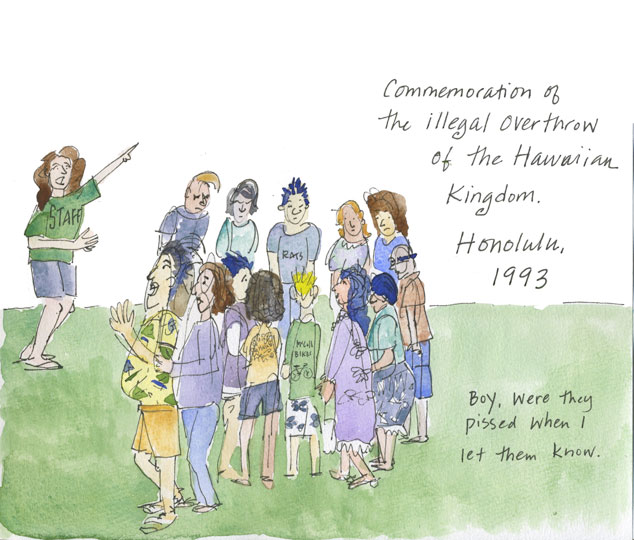
  • The illegal overthrow of the Hawaiian monarchy by a bunch of American businessmen (after the January 6 insurrection, this became very real to me) and Queen Liliuokalani’s subsequent imprisonment
  • The bombing of Pearl Harbor
  • The Mainland imprisonment of Japanese Americans
  • The emergence of many technologies like air travel and motion pictures
Other memorable details include fictional interactions with Father Damien. Damien is historically written as a hero: someone who came to lawless Kalaupapa and imposed order and civilization. In the book, he’s a religious zealot (one of those “my way (salvation) or the highway (Hell)” guys) and I realize that he was; he may have brought some needed management but I can no longer think of him as a factor only for good.

The victims were all treated like criminals—shunned by their families and society, banished and basically imprisoned. Many died so fast that their graves remain unmarked. The Christians on the peninsula were heavy-handed in the way they treated the patients, e.g. in the book, they don’t allow the girl to live with her only family in the settlement, her Uncle and his lover (also patients), because they “feared for her safety” being out in the community. Instead she’s forced to live with the nuns and is raised by them.
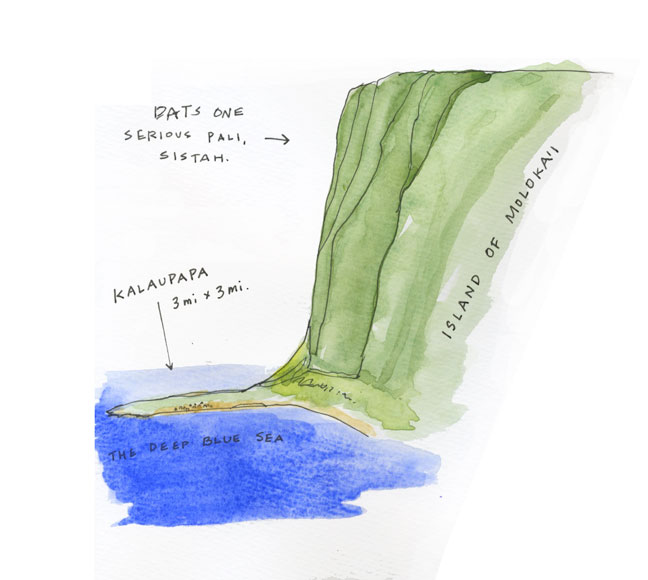
But I digress. Listening to the book brought back flashes of my own visit in 1990. I had joined a weekend Sierra Club service trip to help clear some of the many unmarked graves. We flew from Honolulu to Kaunakakai and then in a puddle jumper to that apron of land bordered by dramatic, vertical pali (ridges) and the Pacific ocean itself. Were it not for its terrible past, the place might be considered a remote paradise. Kalaupapa is now a national historical site.
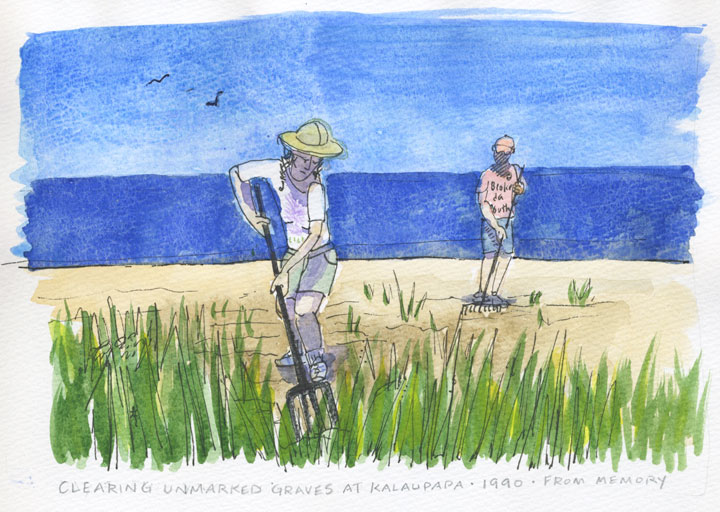
It was like the town that time forgot, with cars from the 40’s and 50’s, dirt roads, limited electricity and only a few residents. When the cure for Hansen’s disease was finally discovered, some patients at the settlement decided to stay in the community rather than live out in the world with their disfigurement and the stigma attached to it. We stayed in the Parks Service bunk house and ate our meals as picnics or in the main house. It was strikingly beautiful and HOT as there are many harsh, open areas. The work was hard but satisfying and during our break, we explored the coast.

By Sunday afternoon, the fog had rolled in and stubbornly refused to leave, meaning that our flight out was canceled and we were staying another night. I was secretly thrilled, but my manager at Hawaiian Graphics was less so—when I called to say I wasn’t able to report to work the following day, she was pretty cranky about it (I think she was jealous).
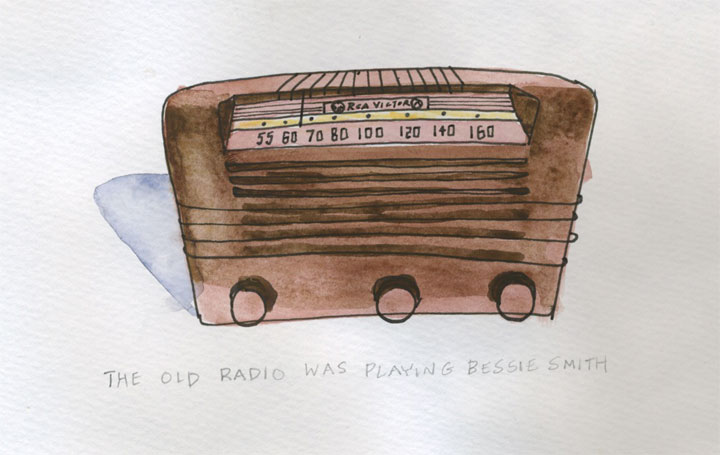
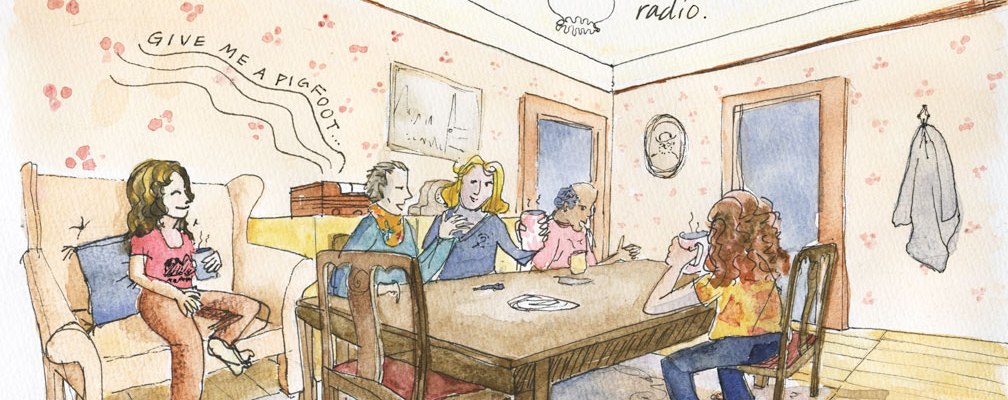
That chilly evening, Kalaupapa was enveloped in mist and a spirit of bygone days. As we dined in the main house among the aged furnishings and décor, a show playing old jazz from Honolulu sputtered through the radio, the sound waves remarkably crossing the 26-mile Ka’iwi channel between the islands, adding to the mystery of the night. This is what I remember most about that trip to Kalaupapa­—­the feeling of a time warp in a place that time forgot.

Stanger Inventory, circa 1979

My family has a hereditary passion for desserts. When I was growing up, this was particularly evident with the plethora of candy, cookies and cake that was always in the house. East coasters might remember the melt-in-your-mouth dream of the partially hydrogenated vegetable oil + sugar filled Yankee Doodle (Drake’s cake) or the pungent artificial flavoring of a Butterscotch Krimpet (Tastykake). Well, those were staples in our fridge, along with any number of Entenmann’s pastries.

Summer after my first year in college usually found me hanging out with my high school buddy, Liz. Life was good! Especially when we stumbled into the kitchen on a humid Jersey eve after my folks had hosted a party. There was an extra cornucopia of sweets and in somewhat of an altered state, we eagerly dove into the riches but with a discriminating perspective: we rated each of the delights on a Shop Rite memo pad.

In the morning, when my folks discovered the list, they couldn’t stop laughing and posted it to their bulletin board, where it lived for decades. They still tell the story and we all get a good chuckle about it.

When I found a copy of the treasured list in a pile of old memorabilia yesterday, I was compelled to preserve it once again, but with a little more embellishment. So now it lives on Suzine!

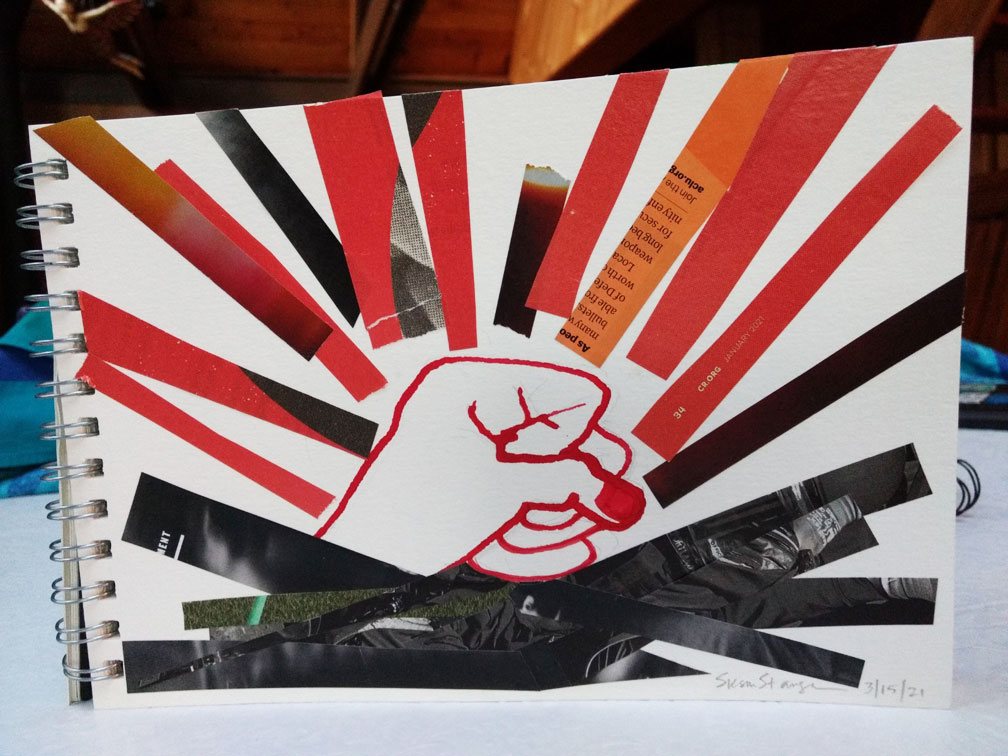
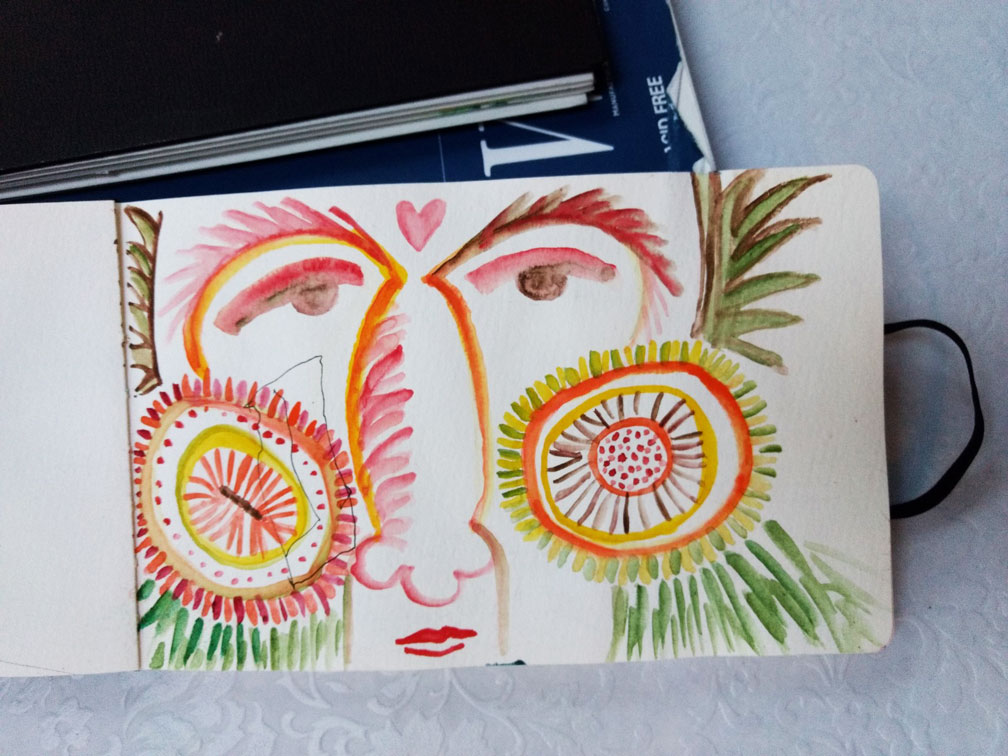
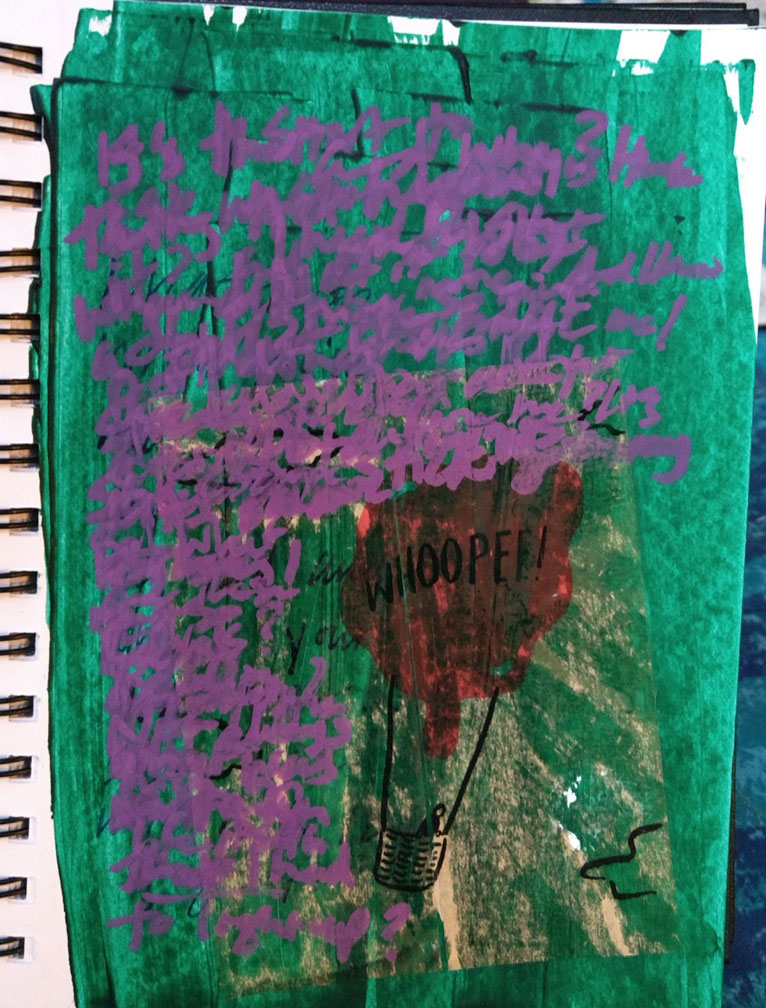
Art Journaling 2021

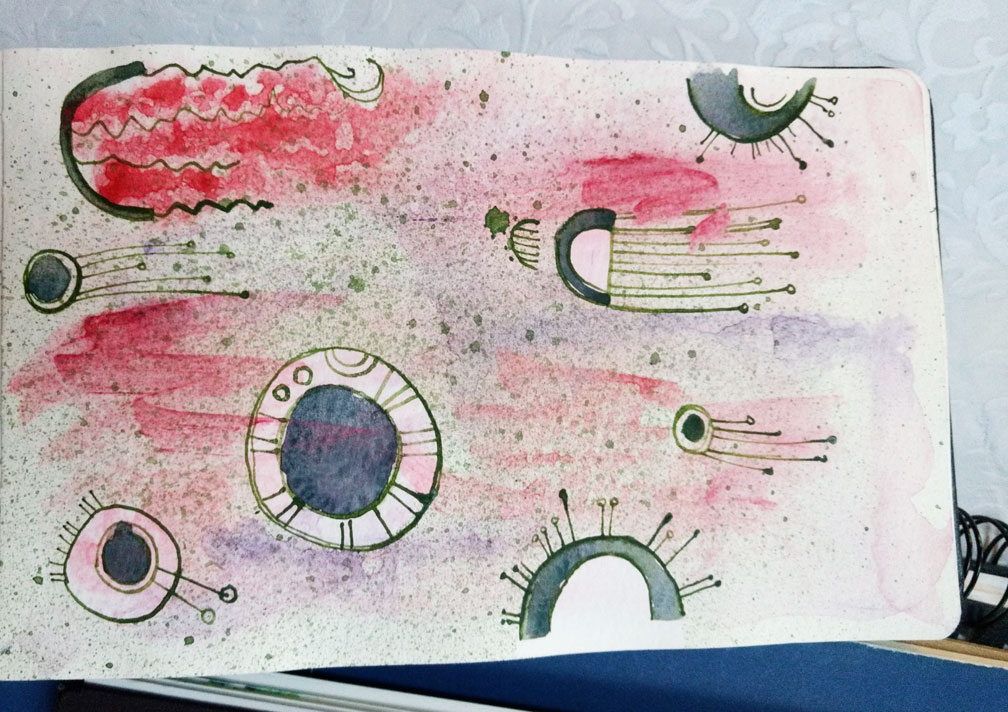
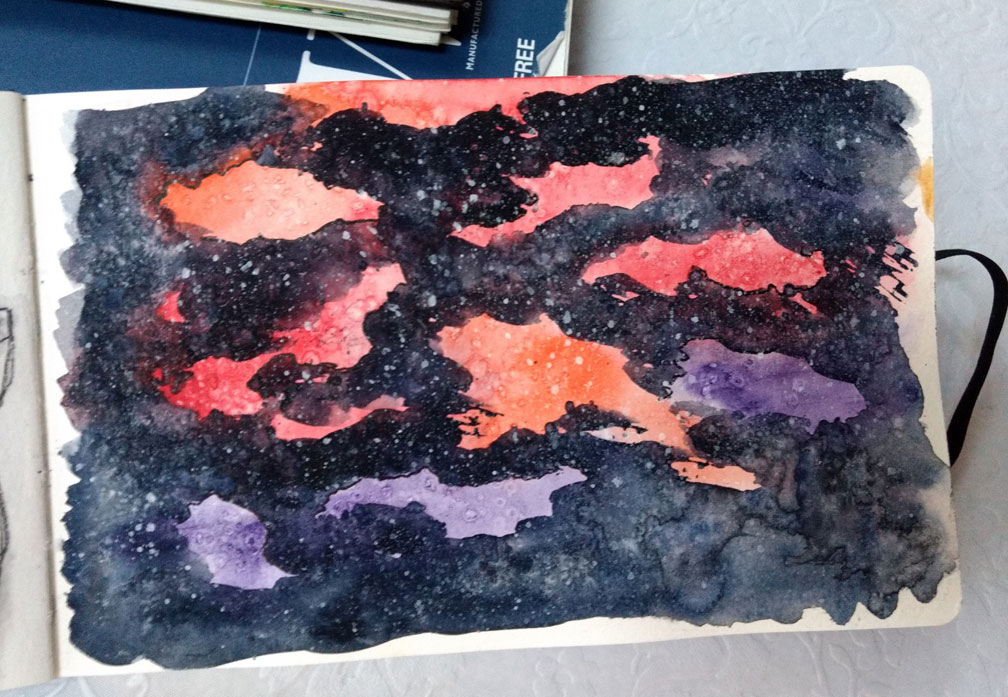
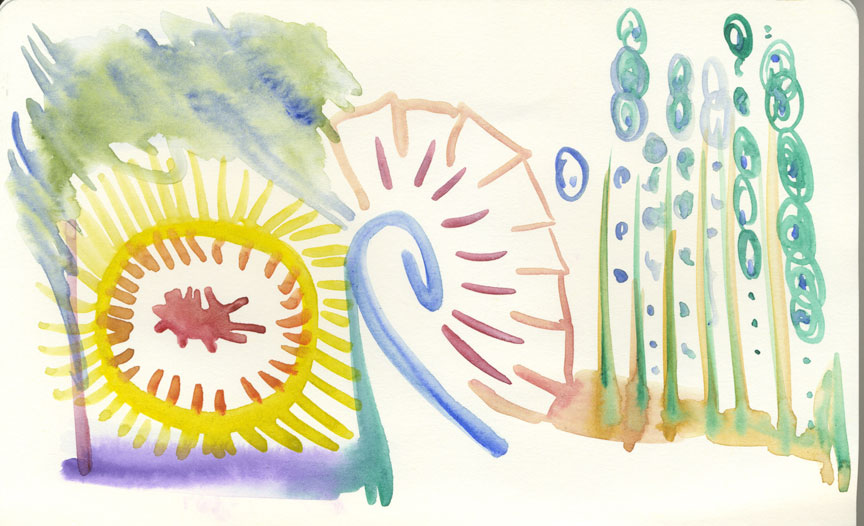
It’s been a cornucopia of art journaling workshops lately. The wonderful Estè MacLeod supplied the info about an incredible opportunity—something called Sketchbook Revival, which offers free art journaling classes by one or two different teachers each day. It’s so rich with fabulous techniques for thinking, not thinking, mark making, collage, rubber stamping, book creation and just playing. Here are a few that I did with that group. #sketchrevival #artjournaling

At the same time, I attended a class at Congregation Beth Sholom in SF—Art Journaling for the Jewish Soul with Debbie Bamberger. I learned so much and enjoyed playing. It’s hard for me to use these new techniques, I had to loosen up and push things. I just let things happen and many of the pieces didn’t work but that was the point for me. To just keep going. It’s exciting! #bethsholomsf

Adding to this post:
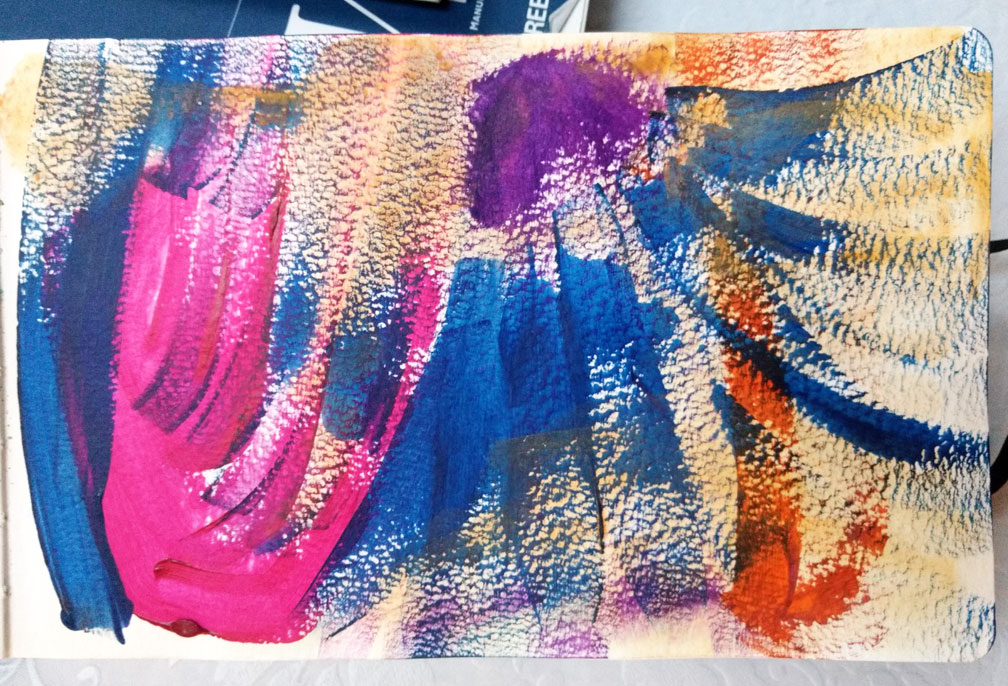
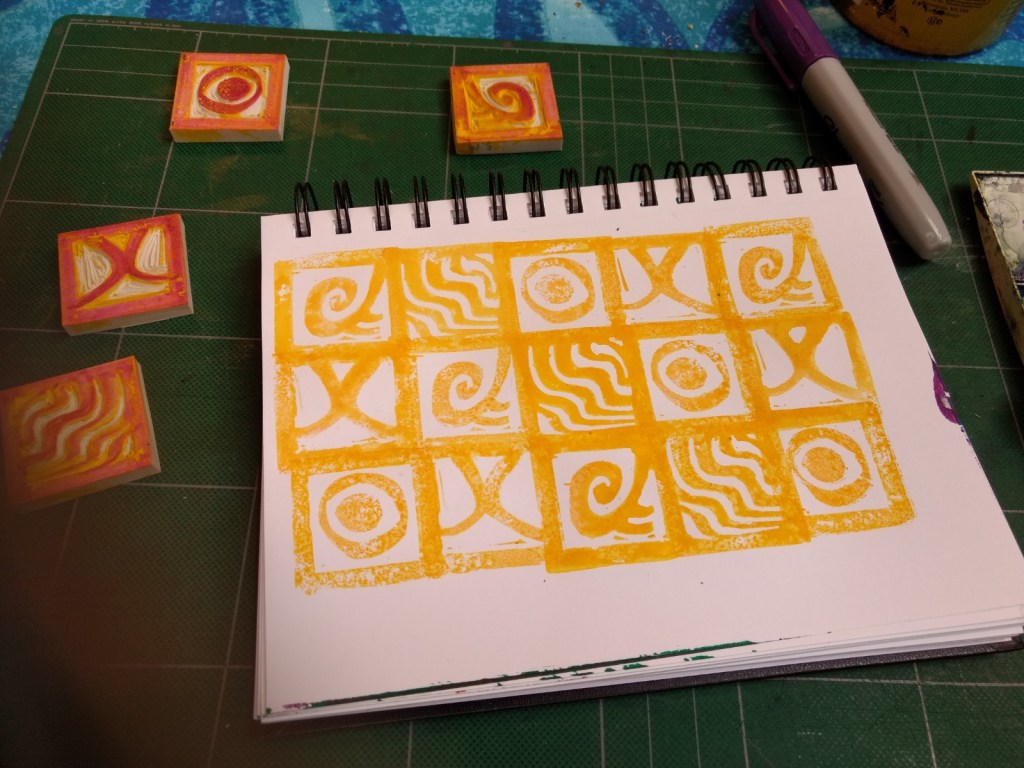
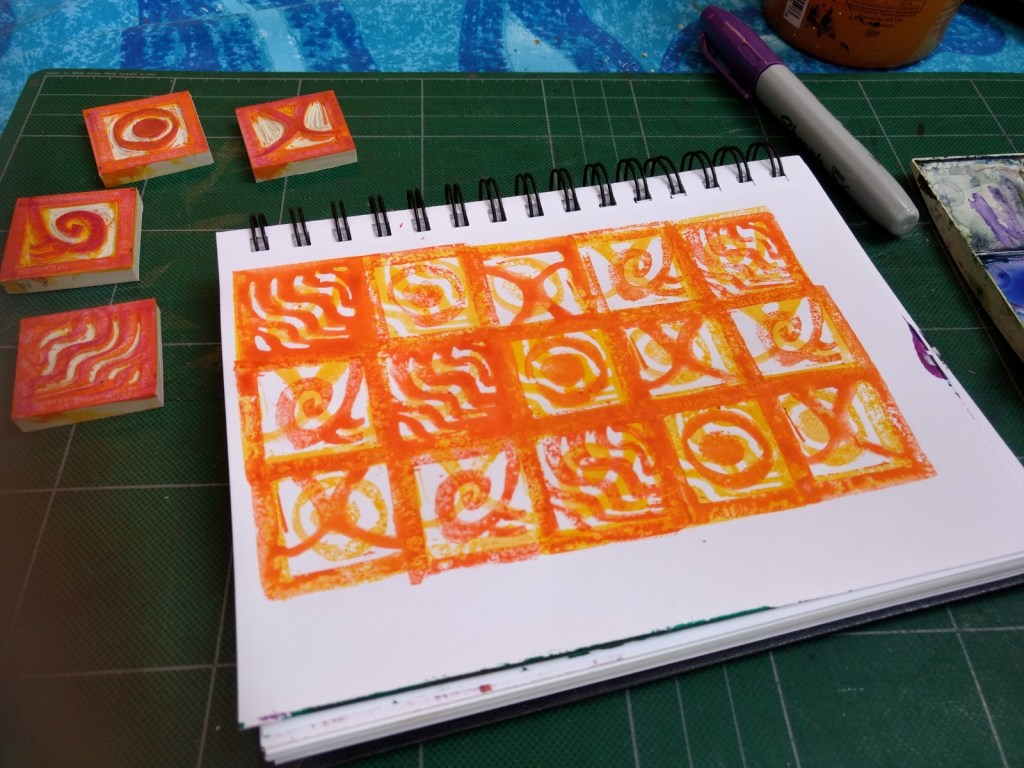
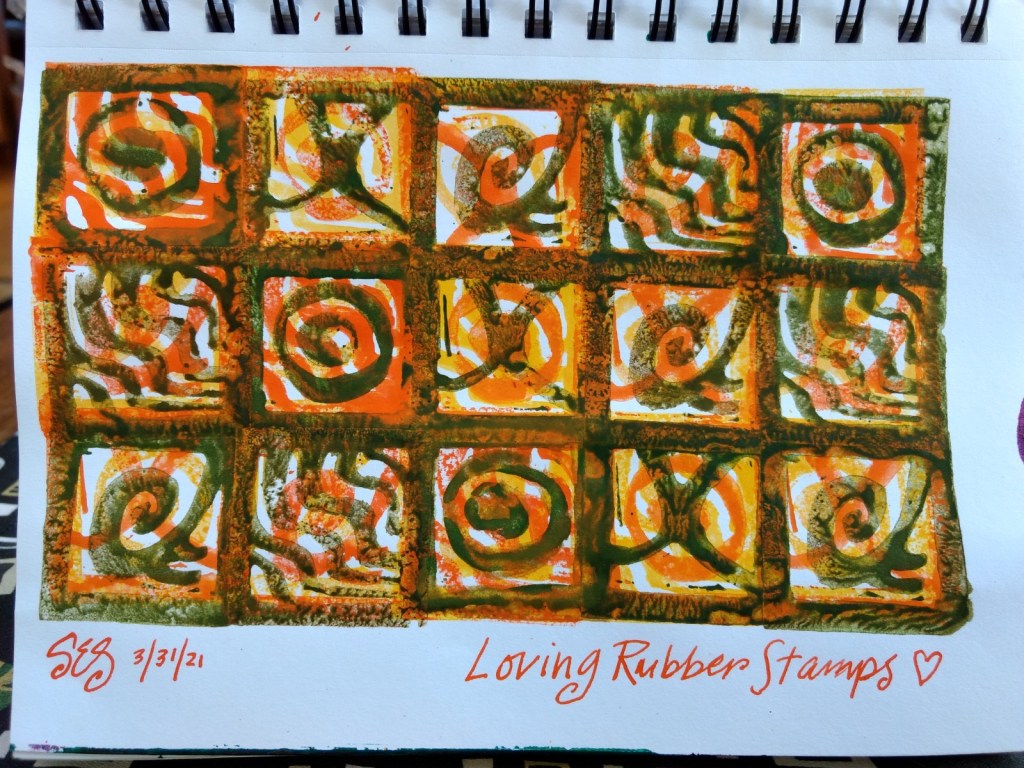
I finally dug into the rubber stamping project. I’ve been chomping at the bit to get to this but hadn’t had time. SO MUCH FUN! I loved the materials as well as the art itself. I used watercolor because I haven’t been able to get the ink pads yet but that’ll come. I’m sure this won’t be my last project with these. Thank you, Sarah Matthews!

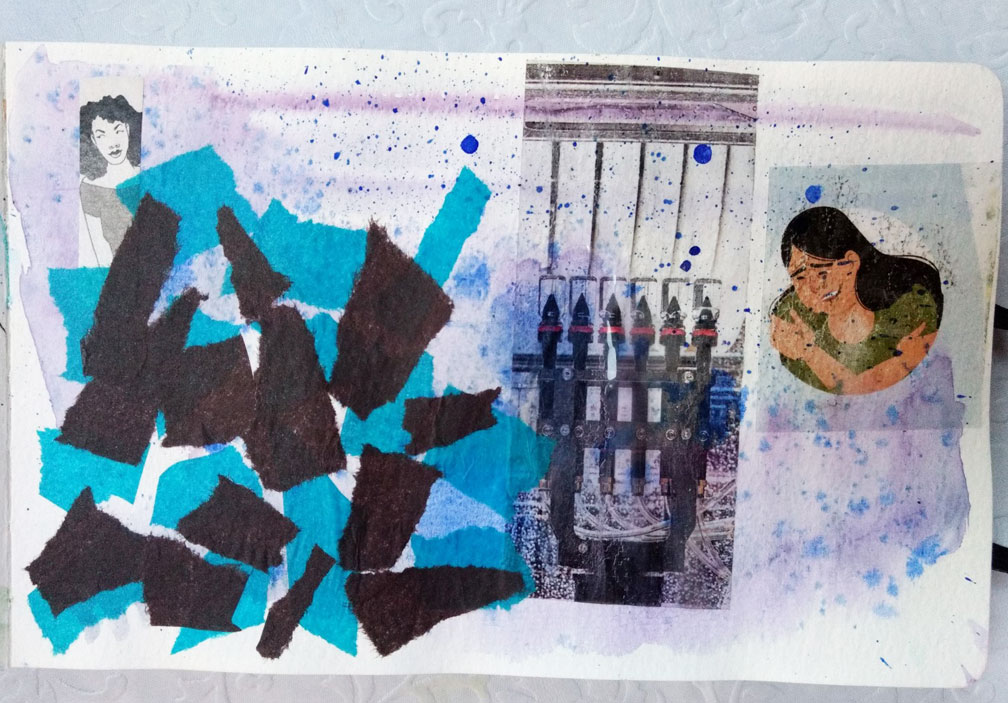
Here’s another piece I did from Sketchbook Revival. Night and Day with Helen Hallows. This was a fun exercise with painting, drawing, collage and even a little rubber stamping. Branching out!

Different Strokes

Form follows function

As an illustrator, I know that I should choose one style and be consistent with it so people can easily associate my work with me. But not all styles fit all functions.

I was recently asked to design a set of posters for San Francisco Strong (#sfstrong-posters) to illustrate the ways we can protect and support ourselves and others during our current pandemic. The small posters would go in people’s windows so I needed to have the work be bold, graphic and easily read from the street.

My sketch style has evolved over the years to what you see on the rest of my site, but back in my Kaua’i days, my work looked very different.

RedGinger4
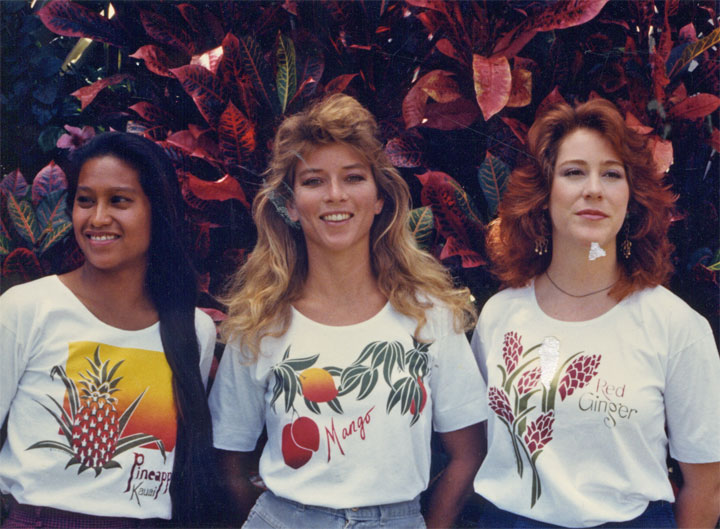
Three beauties modeling my work

OldBizCardIn my first major entrepreneurial venture, Red Ginger, I designed and sold T-shirts, which I printed in my garage. At the time, my technique was to cut the drawing and lettering through a thin layer of laquer film that was stuck to acetate. After peeling off the positive areas, I adhered the laquer (with a nasty chemical) to the screen, removed the acetate and then squeegeed the ink through to the fabric. I had to use an x-acto knife as my primary tool (not quite as bad as using your finger as a stylus, but you get the idea).
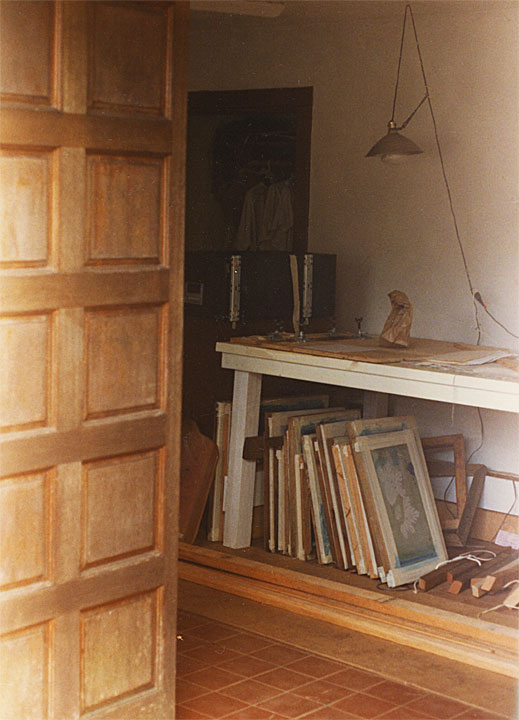
Additionally, I employed a homemade system of two screens on hinges so I could make two color designs. It was a crude system that could not handle tight registration.

Studio1
The screens in my studio

Studio4
That’s me at the drawing board

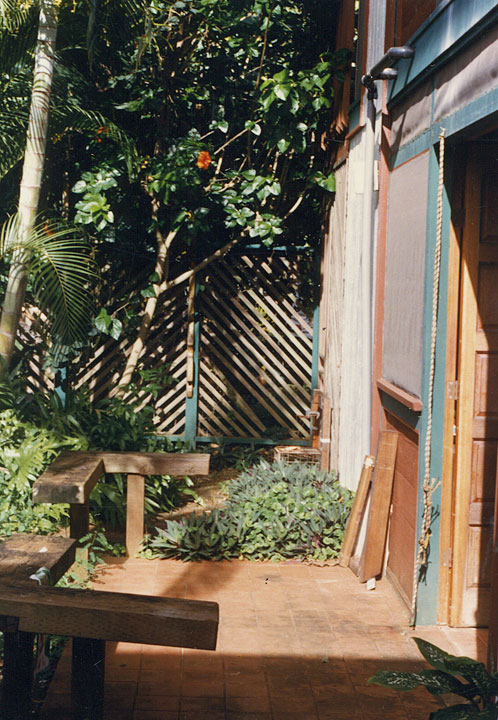
Studio3
Everything dried out here on the patio

Due to these technical limitations, my style developed to include white lines between large color blocks.

RedGinger2
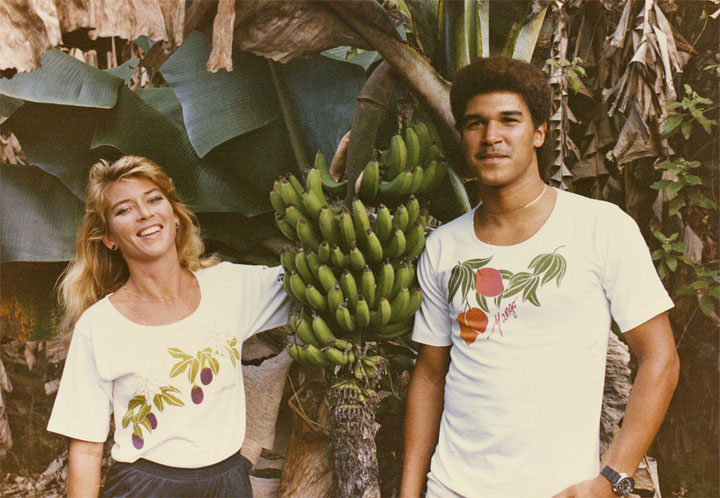
Another promo shot

RedGinger1
At Anahola Beach. That’s me, with the hair, on the left

HalleysComet
Full disclosure: not printed by me

Tahiti
Looking at these, I think they’re pretty simplistic but I still love them


Fast forward to today (you knew I’d get here at some point). I instinctively conceived of the #SFStrong.posters in this graphic style.

So that’s why they’re so different from my sketches. But actually, I think that most, if not all illustrators have many styles but they choose to put only one forward for the reason I mention above.

Do they wish they could mix it up more? Do they do that? I’d love to hear your thoughts on this.

Stay safe, everyone.
Susan


6 Shoes (not feet)

While working a project of posters for Covid prevention in San Francisco (soon to be posted here), I went down a cockamamie rabbit hole. I thought that I’d use different shoes for the 6 foot recommended distancing but that didn’t work in my design at all. Instead, I reworked (and renamed) them. Gossamer comes from my favorite Bugs Bunny cartoon of all time Hair Raising Hare.

6Shoes

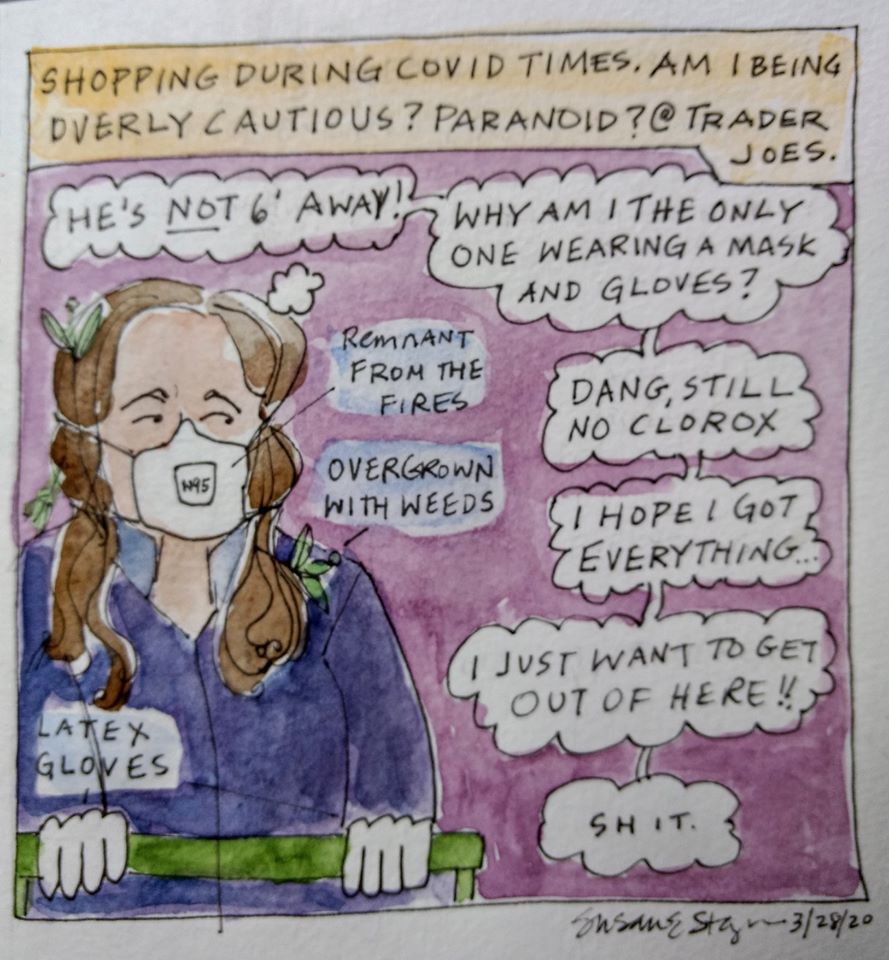
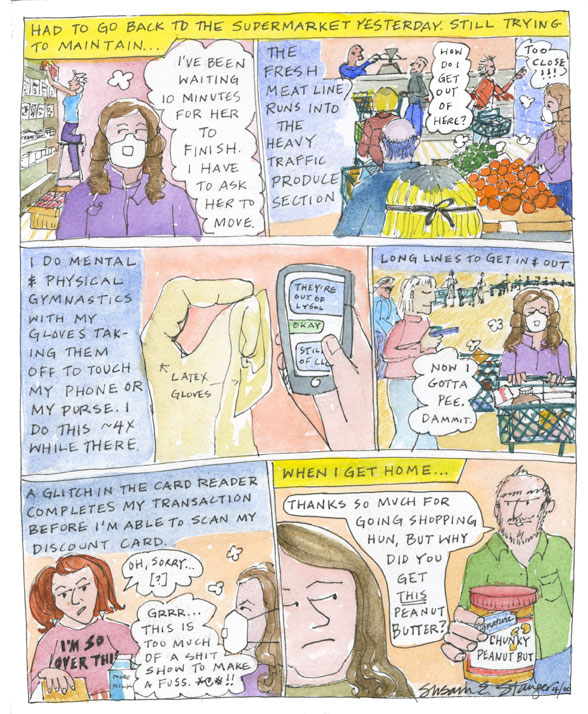
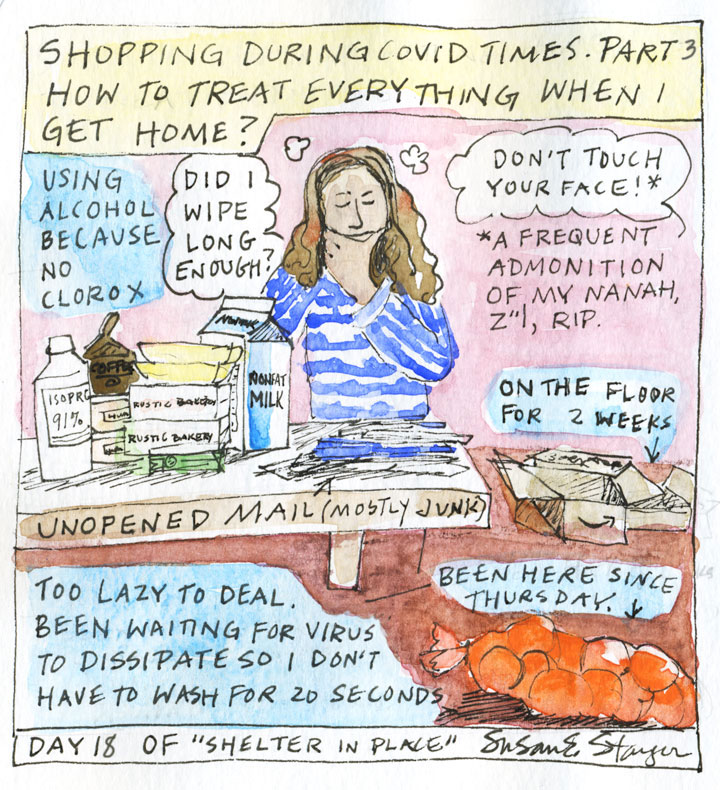
Shopping during Covid times

The day after we returned from the Big Island, we were directed to start sheltering in place. We’d already planned to do this (after all, we’d been traveling), so it wasn’t a surprise.

It’s just that shopping was (and still is, at time of this post) a scary experience. My therapy is to make comics.

Covid-1

I’m not wearing gloves to the store anymore but I was when I did this comic, and it was a major juggle.

Just wanting to get out asap makes for lousy choices and lower quality produce (grab that bag of mangoes and find out that the ones at the bottom are all wrinkled and kinda brown).

Covid-3

I had seen a video of this doctor who disinfected everything and then I read that I didn’t have to. SO CONFUSING.

Covid-2Stay safe everyone!


The Eyes Have It

Mitch said to me, “My left eye is cloudy—as if my glasses are dirty but I’m not wearing glasses.”

We were boarding a flight to San Juan, P.R., our destination alternative to a Hurricane soaked Big Island. Thus began a four-month ophthalmic odyssey involving around a dozen eye and retina appointments, two nasty procedures, two surgeries and the terror of temporary blindness. It’s been a tough year for my sweetie.

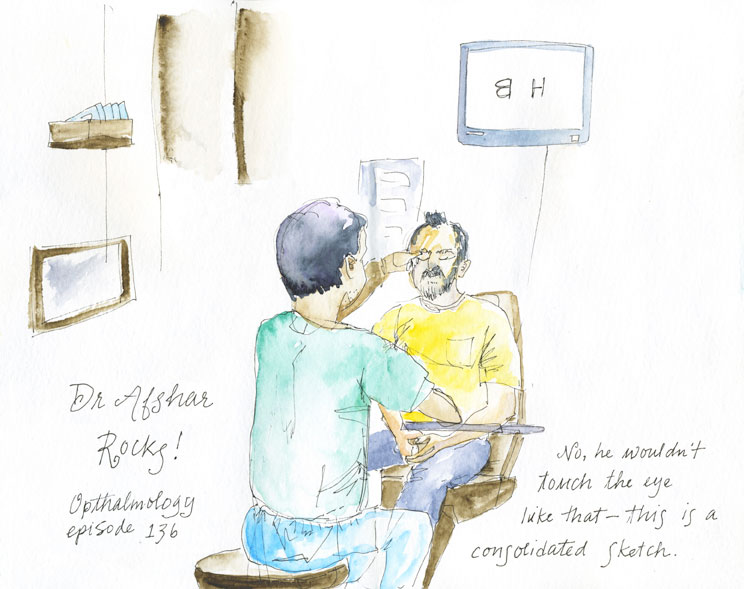
CoverWe got to know most of the doctors at the UCSF Ophthalmology department. With nothing to do but worry, I kept myself busy during the appointments by sketching.
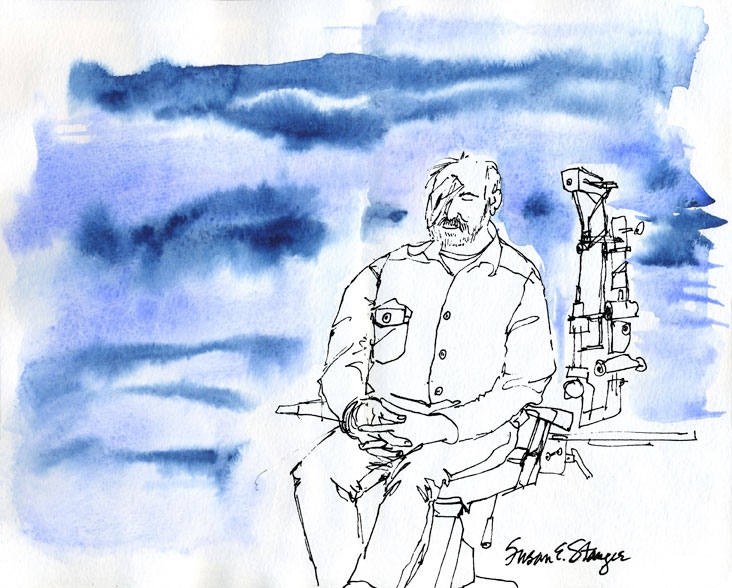
Recovering from retina surgery is an ordeal. The patient has to keep his face down/parallel to the floor 90% of the time for four days. We rented a massage chair thing and apparatus for sleeping as well. 

The planets were aligned against us, as two weeks following the left eye surgery, the right eye retina tore as well. What are the odds? This took us…

1Opthalmology

4TheEyesHaveit21

2Opthalmology-3

DrAfshar

The ordeal—two torn retinas at the same time: blind man’s bluff for 4 months. The sketches are all from eye #2. And it doesn’t include the appointments in Puerto Rico. 

Thanks to the incredible Ophthalmology staff at UCSF for restoring Mitch’s sight! Now for a new prescription…

Three Generations

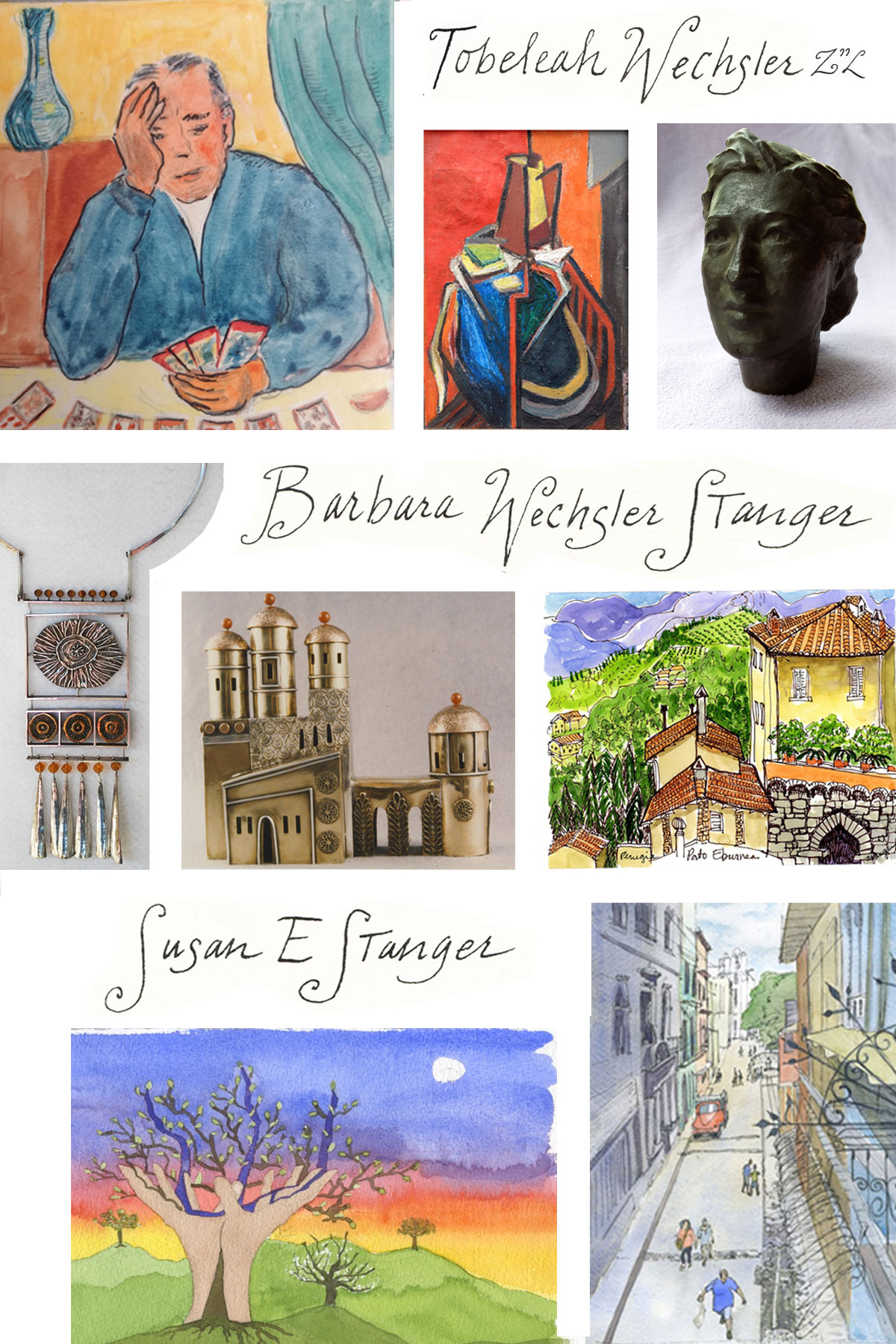
I’m excited to be exhibiting my work with my mother and my grandmother all together in one show! We open this Thursday at the Jewish Community Library in San Francisco.

Postcard-Front

Postcard_backside_infoLe-dor va-dor means “From Generation to Generation.” It expresses the directive to teach your children the culture, values and lessons of Judaism. In our case, the teachings included art! My grandmother was a painter and sculptor, my mother is a metalsmith, ceramist and one who draws. I’m a sketcher and painter. Together, our work will span over a hundred years of art in one family.
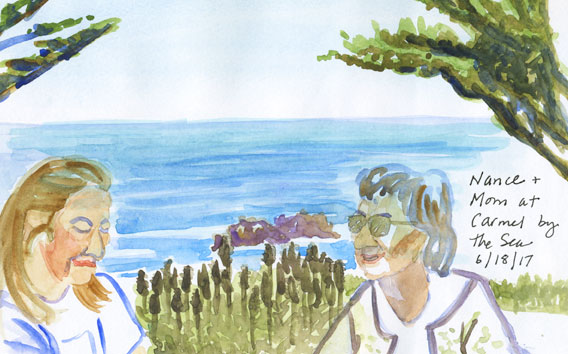
I never knew my grandmother, but I’m so honored and thrilled to be showing my work with hers.

The Bay Area Jewish Weekly published a nice article about our show.

Family Reunion and Mini-Vacation

For the first time in over 25 years, my mother’s family had a reunion. I love my family and we always have great fun together. I’m very fortunate that so many live within 2-3 hours from San Francisco. But I don’t see the rest of the gang much at all.

So, I was excited that our family was getting together in Monterey, CA, only 3 hours from us. I designed the t-shirt and helped with some other details. Pictured below: My great grandmother, Bertha Soloveichik Tumpson and Albert Joseph Tumpson.

I_survived_the_Reunion_webWe drove down on Friday and ran into traffic in Half Moon Bay and Santa Cruz, of course. It’s still so beautiful on the coast. We were blessed with incredible weather, sunshine and not too much wind.
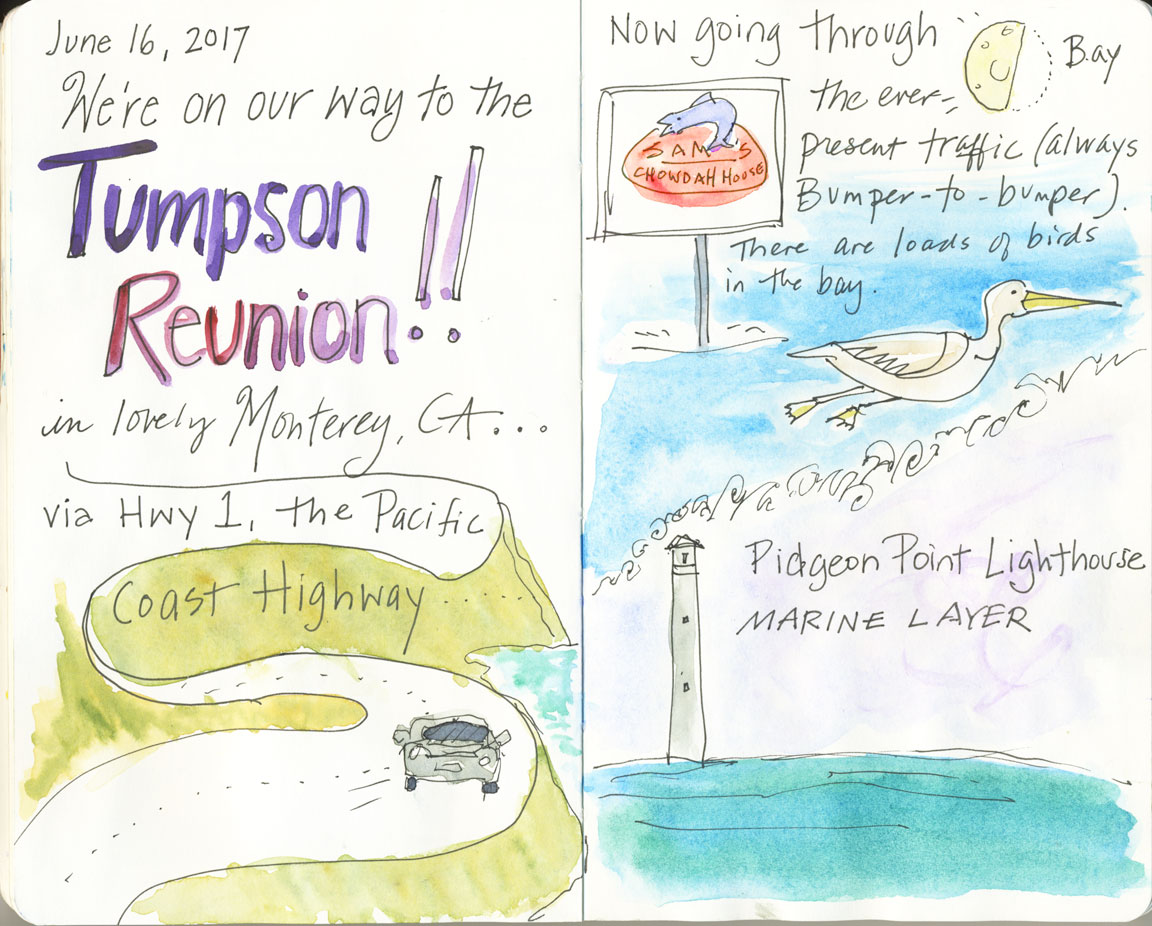
The incredible Janet Takahashi taught me to sketch when I’m a passenger in the car. This is a great distraction when traffic is heavy. Even if the work is rough, it’s fun!

TravelingToMonterey-LTravelingToMonterey-1

The reunion was cousins galore! I caught a few:

The answer is, “At the Louvre.”

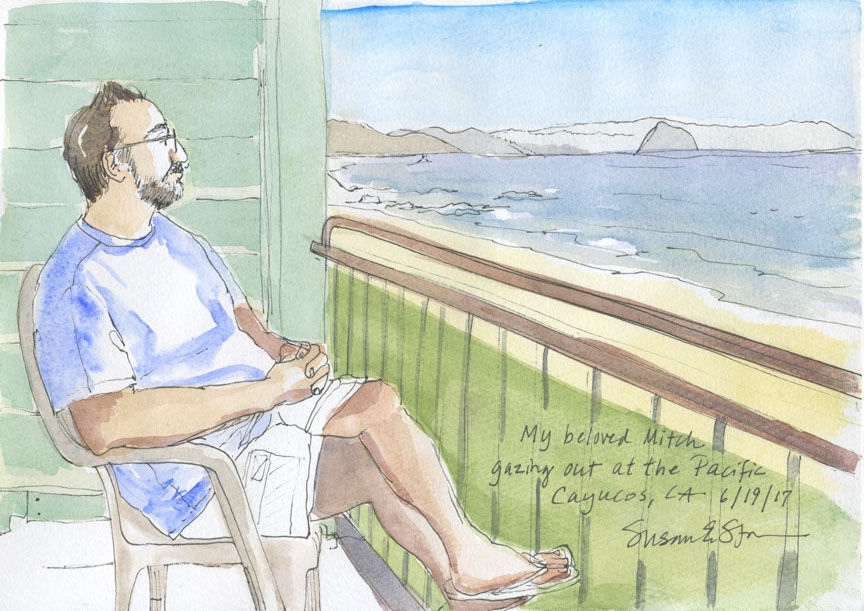
Following the big event, we got some needed R & R on the Central Coast in lovely Cayucos, north of Morro Bay.

Cayucos2

We caught some FUN waves.

Cayucos1

And on our second day, visited Morro Bay.

MorroRock-L

The sign says, “Death from Drowning happens once in a lifetime. Undertow of surf can make return to shore impossible.” The waves were churning and there around 30 surfers were catching rides.

The rock itself is impressive and beautiful. On the other side of the spit, there were two dozen otters lazing in the water. Not shown here are the towering smokestacks of the power plant; an odd imposition on an otherwise picturesque location.

Back in Cayucos, we assumed the position.

Mitch

Sad to end our wonderful mini-vacation, I could only muster a weird doodle in the car.

NorthDriveDoodle